News

AeroDrops: Selective Detection of Individual Airborne Droplets

Airborne diseases transmitted through respiratory droplets pose a serious public health risk

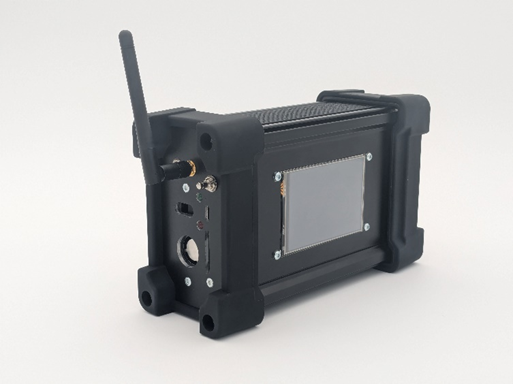
AeroDrops is the first device to selectively detect and count respiratory droplets in real time, enabling smart, data-driven ventilation control that reduces infection risk, improves indoor air quality, and lowers energy costs. The project received RSF-IND funding at Jožef Stefan Insitute.

Watch AeroDrops promotional video.

And explore AeroDrops technology offer.

Visit of the Beijing Jiaotong University delegation at the Jozef Stefan Institute

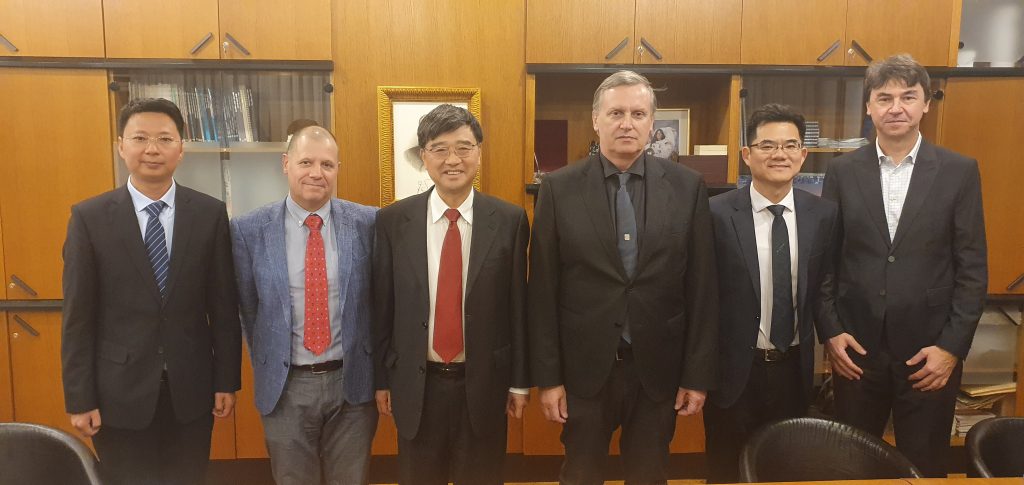
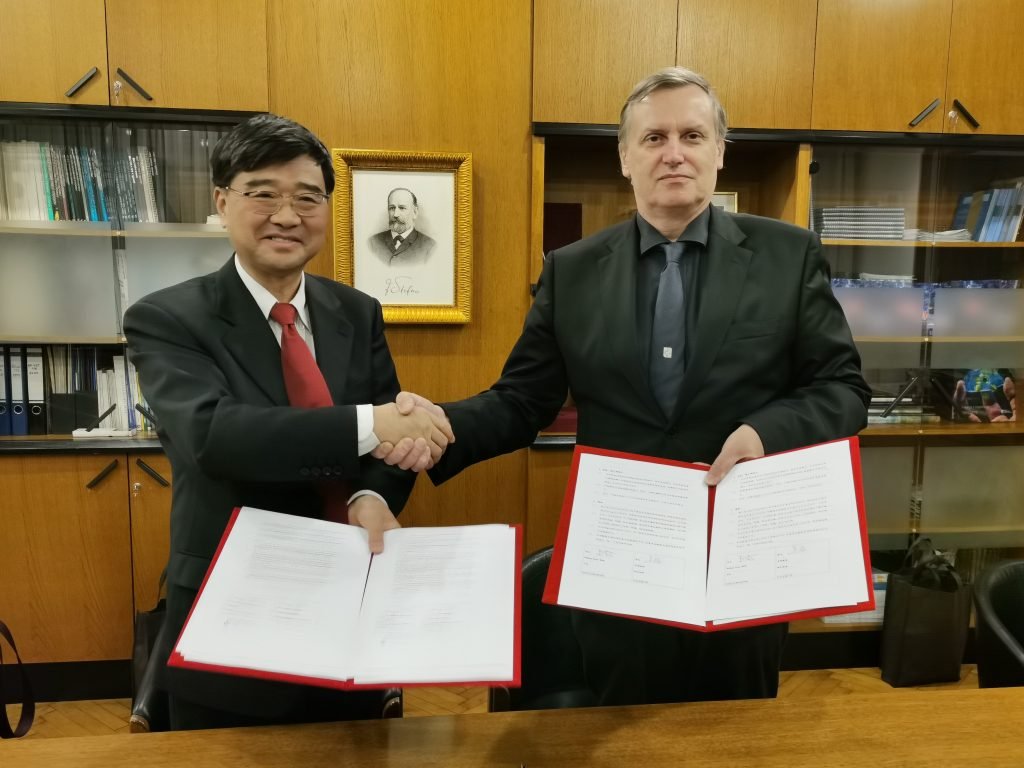
On 22nd November 2023 the director of the Jožef Stefan Institute, Prof. Dr. Boštjan Zalar, met with the delegation of Beijing Jiaotong University (BJTU), consisting of the Vice President of BJTU, Mr. Qiang Wu, Prof. Dr. Ke Guan and Dr. Lei Fan.

BJTU is active in the fields of electrical engineering, computer science, economics, transportation, civil engineering, mechanical engineering, physics, architecture, and law. The university, which enrolls 30,000 students each year, comprises 18 schools.

The aim of the visit was to strengthen and expand the cooperation between BJTU and IJS, which has successfully existed for more than 10 years with the Department of Communication Systems (E6). During the meeting, the director of IJS presented the institute, its research areas, research infrastructure and highlighted some of the most important achievements. Following this, the Vice President of BJTU, Mr. Qiang Wu, also provided key information about their university, in particular about its operation and organization, areas of activity and international cooperation. Subsequent discussion was focusing on the supporting activities to innovation processes that IJS offers to researchers, which was supported by M.Sc. Robert Blatnik.

At the end of the successful meeting the Vice President of BJTU, Mr. Qiang Wu, and the Director of IJS Prof. Dr. Boštjan Zalar signed a Memorandum of Understanding governing future collaboration.

Best Paper Award

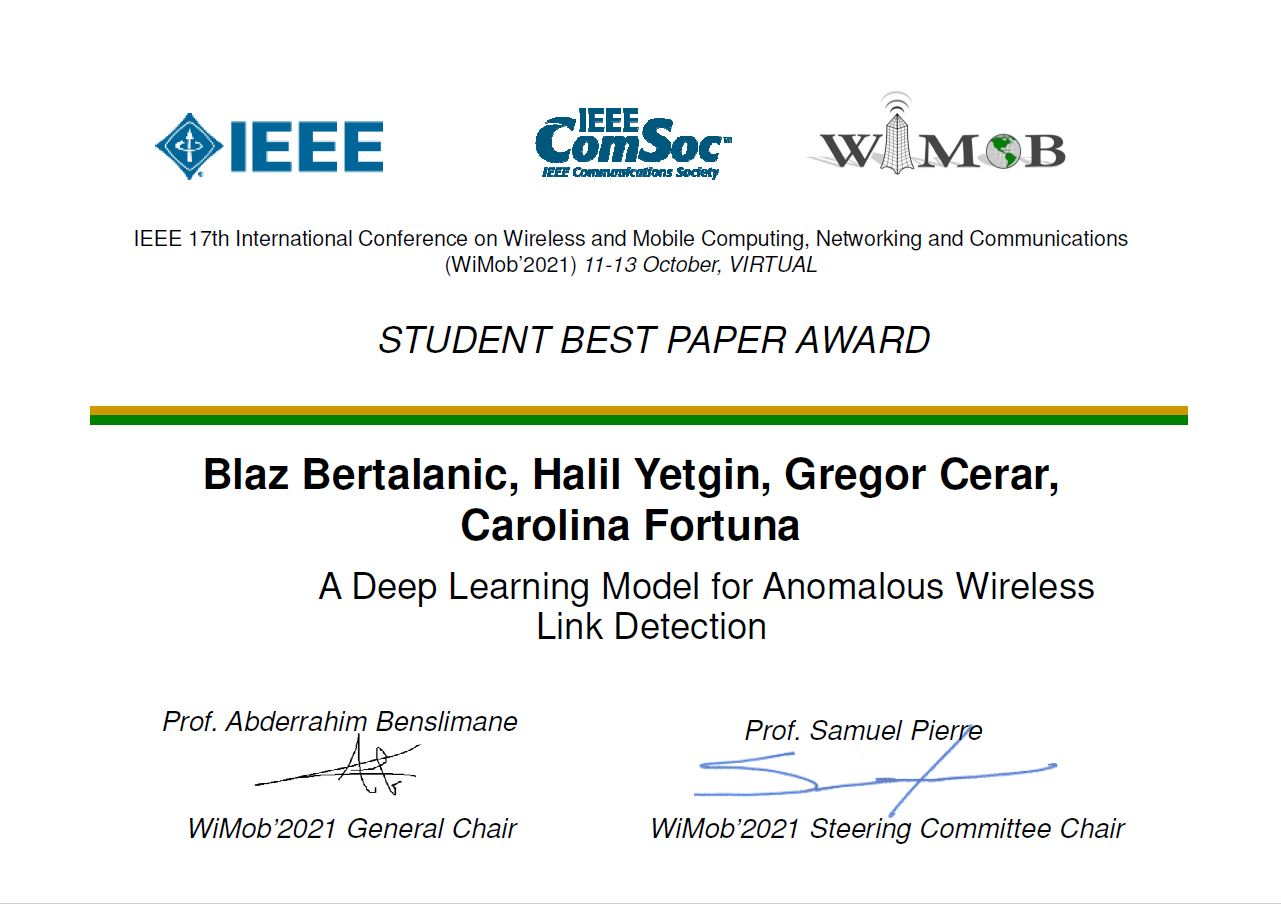
Sodelavec Odseka za komunikacijske sisteme Instituta “Jožef Stefan” Blaž Bertalanič je s soavtorji dr. Halilom Yetginon, dr. Gregorjem Cerarjem in dr. Carolino Fortuna na mednarodni konferenci IEEE 17th International Conference on Wireless and Mobile Computing, Networking and Communications WiMob’2021 prejel nagrado za najboljši študentski članek z naslovom “A Deep Learning Model for Anomalous Wireless Link Detection”.

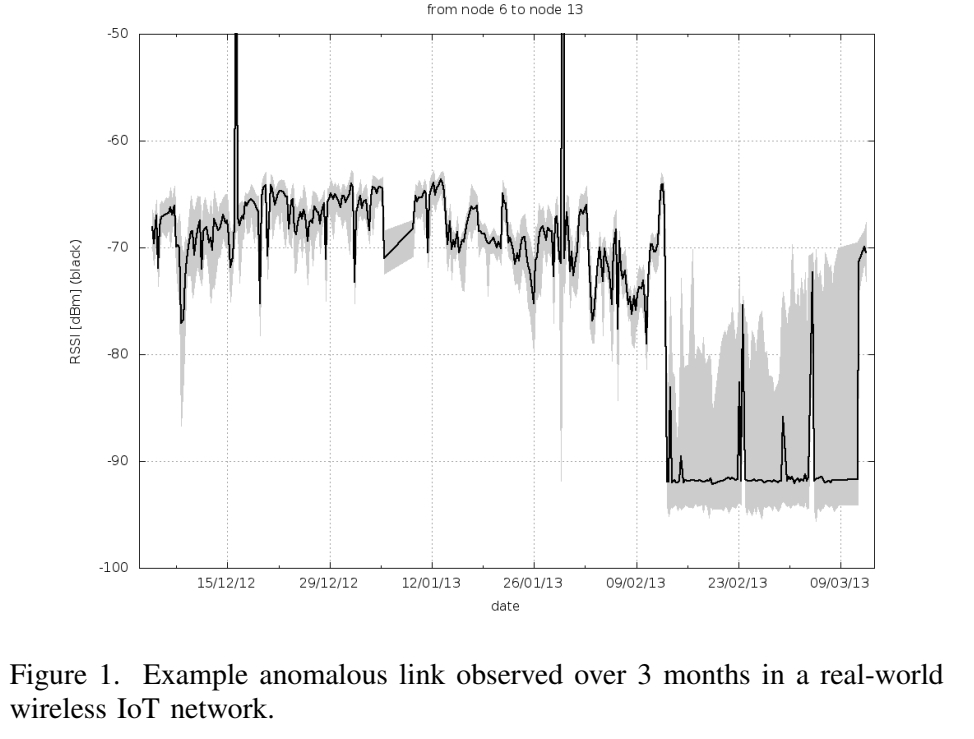
V prispevku so predstavili zasnovo in razvoj avtomatskega razpoznavalnika anomalij na povezavah med napravami v brezžičnih omrežjih. Z nenehnim povečevanjem števila naprav, ki se povezujejo v brezžična omrežja, postaja ročno upravljanje in nadzor slednjih vse bolj zahtevno. Z avtomatskim zaznavanjem in prepoznavanjem značilnosti v signalih, ki kažejo na odstopanje od pričakovanega delovanja, lahko močno skrajšamo odzivni čas za odpravo napak in posledično skrajšamo izpade kritičnih storitev in z njimi povezane stroške. Takšni nadzorni algoritmi bodo ključni za zanesljivo obratovanje in upravljanje brezžičnih omrežij prihodnosti.

Postdoc in generative design and optimization of networks

We are looking for a motivated, pro-active and independent researcher that would join a growing young team.

Description:

We are looking for a motivated, pro-active and independent researcher that would join a growing young team. The research of the team focuses on data driven generative design and optimization of various aspects of wireless and energy networks. Some recent research topics: event detection, anomaly detection, non-intrusive monitoring, data pipelines, embedded AI.

You will contribute to:

  • The establishment of short and long term research agenda
  • Generate new ideas for research and projects
  • Lead the activities of running projects
  • Coordinate/write scientific papers for dissemination in journals and at conferences
  • Advise PhD students

About us:

Jožef Stefan Institute is the leading Slovenian scientific research institute, covering a broad spectrum of basic and applied research. The staff of more than 1000 specializes in natural sciences, life sciences and engineering. The mission of the Jožef Stefan Institute is the accumulation and dissemination of knowledge at the highest international levels of excellence. The Institute is also a local leader in technology transfer through extensive collaborations with industry and associated spin-offs and start-ups. The announced post is with the Department of Communication Systems.

Jožef Stefan Institute’s offices are located a 20-minutes’ walk from the center or Ljubljana, with convenient public transport connections. Ljubljana is a human sized city and a very pleasant place to live in with only 40 mins drive to ski resorts and 1 hour drive to the Adriatic sea.

What we offer:

  • Working in a world class international research environment involved in international collaborative projects
  • Opportunities to publish in the best journals and conferences in the field
  • Additional training in the form of specialized workshops, tutorials, summers schools, technical events
  • Connections to deep tech start-ups
  • Flexible working hours
  • Subsidized child care, Slovenia offers a very good environment for families
  • 12 months of paid maternity leave, also some paid paternity leave according to the existing laws and regulations

Required qualifications and selection criteria:

The applicant must hold a PhD degree or equivalent in related field (computer science, electrical engineering, physics or mathematics) obtained no more than three years prior to the application due date; however, for example, periods of sick leave or parental leave can be deducted from the three-year period. For this position, it is required to have analytic thinking, a good track record of publications, good knowledge of at least one programming or scripting language (Python, Matlab, Javascript, C++, etc.) and a good command of English language. Any prior experience with data analytics, code development and communication networks as well as knowledge of embedded systems is a plus.

Employment: The default is one year full-time employment with possible extension.

Place of work: Ljubljana.

Information: Further information is available from sensorlab@ijs.si and the head of the lab, Dr. Carolina Fortuna, carolina.fortuna@ijs.si. More information can also be found at https://sensorlab.ijs.si (lab) and https://e6.ijs.si (department).

Application: The application must include a cover letter describing motivation, research interests & relevant experience, a detailed CV, pointers to recent relevant project (e.g. GitHub repository) or/and journal publications, a digital copy of PhD certificate and possibly one letter of recommendation.

Type of employment: Temporary position longer than 6 months

Contract type: Full time

First day of employment: Subject to agreement

Salary: Standard academic salary and additional bonus for good performance

Number of positions: 1

City: Ljubljana.

Country: Slovenia

Machine Learning for Wireless Link Quality Estimation: A Survey

Excellent overview of machine learning for estimating the quality of wireless links including an application perspective analysis and a design process perspective analysis.

Excellent overview of machine learning for estimating the quality of wireless links including an application perspective analysis and a design process perspective analysis. To appear as early access in IEEE Communications Surveys and Tutorials.

In the meantime, the work is available at https://lnkd.in/dSqWvSy.

Congrats go to Cerar, Yetgin and Mohorčič.

#machinelearning #communications #quality #design

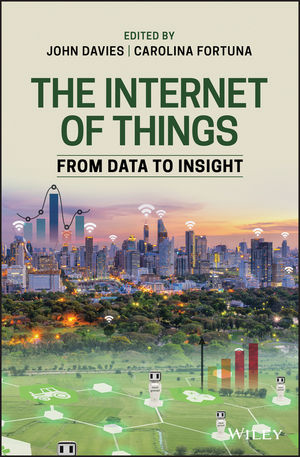
A new Wiley book “The Internet of Things: From Data to Insight” edited by John Davies and Carolina Fortuna

comprehensive coverage of the current state of IoT, focusing on data processing infrastructure and techniques

Written by experts in the field, this book addresses the IoT technology stack, from connectivity through data platforms to end-user case studies, and considers the tradeoffs between business needs and data security and privacy throughout. There is a particular emphasis on data processing technologies that enable the extraction of actionable insights from data to inform improved decision making. These include artificial intelligence techniques such as stream processing, deep learning and knowledge graphs, as well as data interoperability and the key aspects of privacy, security and trust. Additional aspects covered include: creating and supporting IoT ecosystems; edge computing; data mining of sensor datasets; and crowd-sourcing, amongst others. The book also presents several sections featuring use cases across a range of application areas such as smart energy, transportation, smart factories, and more. The book concludes with a chapter on key considerations when deploying IoT technologies in the enterprise, followed by a brief review of future research directions and challenges.

The Internet of Things: From Data to Insight

  • Provides a comprehensive overview of the Internet of Things technology stack with focus on data driven aspects from data modelling and processing to presentation for decision making
  • Explains how IoT technology is applied in practice and the benefits being delivered.
  • Acquaints readers that are new to the area with concepts, components, technologies, and verticals related to and enabled by IoT
  • Gives IoT specialists a deeper insight into data and decision-making aspects as well as novel technologies and application areas
  • Analyzes and presents important emerging technologies for the IoT arena
  • Shows how different objects and devices can be connected to decision making processes at various levels of abstraction

The Internet of Things: From Data to Insight will appeal to a wide audience, including IT and network specialists seeking a broad and complete understanding of IoT, CIOs and CIO teams, researchers in IoT and related fields, final year undergraduates, graduate students, post-graduates, and IT and science media professionals.

TABLE OF CONTENTS

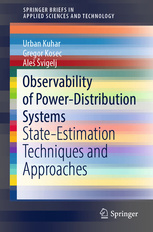
Observability of Power-Distribution Systems: State-Estimation Techniques and Approaches Springer, 2020.

Authors: Urban Kuhar, Gregor Kosec, Aleš Švigelj

The Springer publishing house has published a book by associates of the Department of communications systems Urban Kuhar, Gregor Kosec, and Aleš Švigelj entitled Observability of Power-Distribution Systems: State-Estimation Techniques and Approaches. The book is part of the Springer Briefs series. The book describes the design and implementation of a three-phase state estimation that is suitable for power-distribution networks. It gathers all relevant state-of-the-art knowledge and provides the missing pieces to offer readers a complete picture of several essential design and implementation factors and ways to address them. The modelling of all the major power-distribution components to enable a three-phase network model’s construction is described, while sensitivity analyses shows how uncertain conductor lengths influence the state-estimation results.

Založba Springer je objavila knjigo sodelavcev Odseka za komunikacijske sisteme Urban Kuharja, Gregorja Kosca in Aleša Šviglja z naslovom Observability of Power-Distribution Systems: State-Estimation Techniques and Approaches. Knjiga je del serije Springer Briefs. V knjigi je opisana zasnova in izvedba trifaznega ocenjevalnika stanja, ki je primerna za distribucijska električna omrežja. Predstavljen je predlagan poenoten tri-fazni model veje električnega omrežja, s katerim je možno enotno predstaviti vse, za naš problem relevantne, gradnike distribucijskega električnega omrežja. Obravnavani so različni ocenjevalniki stanja. Ovrednotena je tudi občutljivost obravnavanih ocenjevalnikov stanja na majhne napake parametrov modela ter majhne napake meritev v omrežju. njiga je del serije Springer Briefs.

V knjigi sta opisani zasnova in izvedba trifaznega ocenjevalnika stanja, ki sta primerni za distribucijska električna omrežja. Predstavljen je predlagan poenoten trifazni model veje električnega omrežja, s katerim je možno enotno predstaviti vse, za naš problem relevantne, gradnike distribucijskega električnega omrežja. Obravnavani so različni ocenjevalniki stanja. Ovrednotena je tudi občutljivost obravnavanih ocenjevalnikov stanja na majhne napake parametrov modela in majhne napake meritev v omrežju.

Emeritus Scientist

Prof. Gorazd Kandus, now retired...

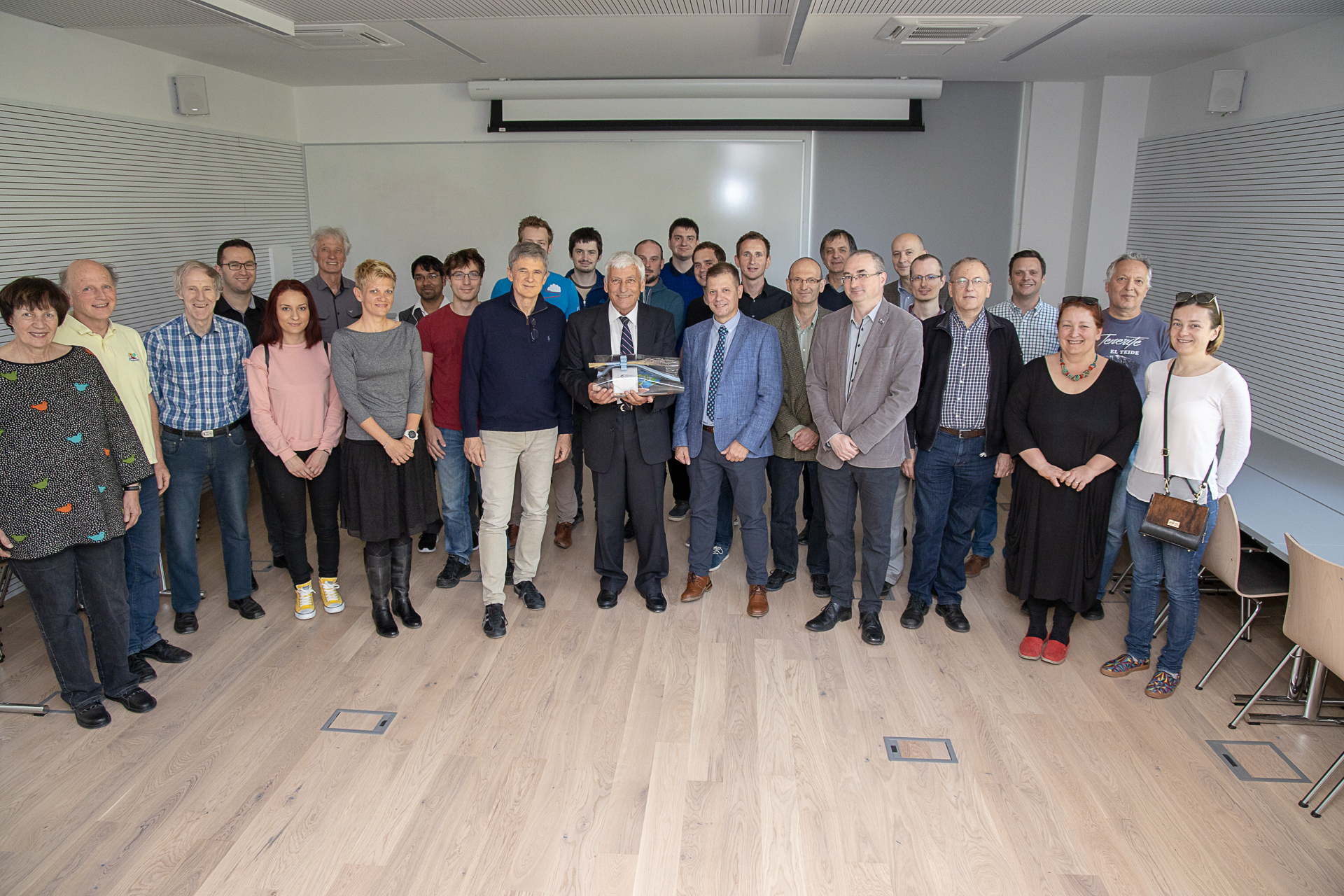
Prof. Gorazd Kandus, now retired long-time head of Department of Communication Systems, was awarded Emeritus Scientist of the Jozef Stefan Institute (= Zaslužni znanstvenik IJS). Congrats, Gorazd!

Obisk in predavanje izr. prof. dr. Ke Guana, Beijing Jiaotong University

Izr. prof. dr. Ke Guan, Beijing Jiaotong University, je v okviru Slovenske sekcije IEEE in organizaciji Odseka za komunikacijske sisteme E6 vodil predavanje z naslovom...

Izr. prof. dr. Ke Guan, Beijing Jiaotong University, je v okviru Slovenske sekcije IEEE in organizaciji Odseka za komunikacijske sisteme E6 vodil predavanje z naslovom:

Towards Smart Rail Mobility at mm Wave and THz Bands: Challenges, Solutions, and Future Directions

Prof. Guan je v svojem predavanju izpostavil glavne izzive brezžičnih kanalov in predstavil trenutno rešitve na področju pametne mobilnosti. Predstavil je module referenčnih modelov kanalov za železniška okolja za milimetrske in teraherčne radijske pasove. Za obdelavo kompleksnih scenarijev z uporabo tehnike sledenja žarkom je predstavil visoko zmogljivo računsko platformo. Ključne tehnologije, ki jih je predstavil, so združene v prototipnem sistemu MHN-E (Mobile Hotspot Network – Enhanced), ki so ga uspešno demonstrirali na Zimskih olimpijskih igrah v PyongChang-u.

European Conference on Networks and Communications – EuCNC 2018

Ljubljana je v dneh od 18. do 21. junija 2018 gostila Evropsko konferenco o omrežjih in komunikacijah EuCNC.

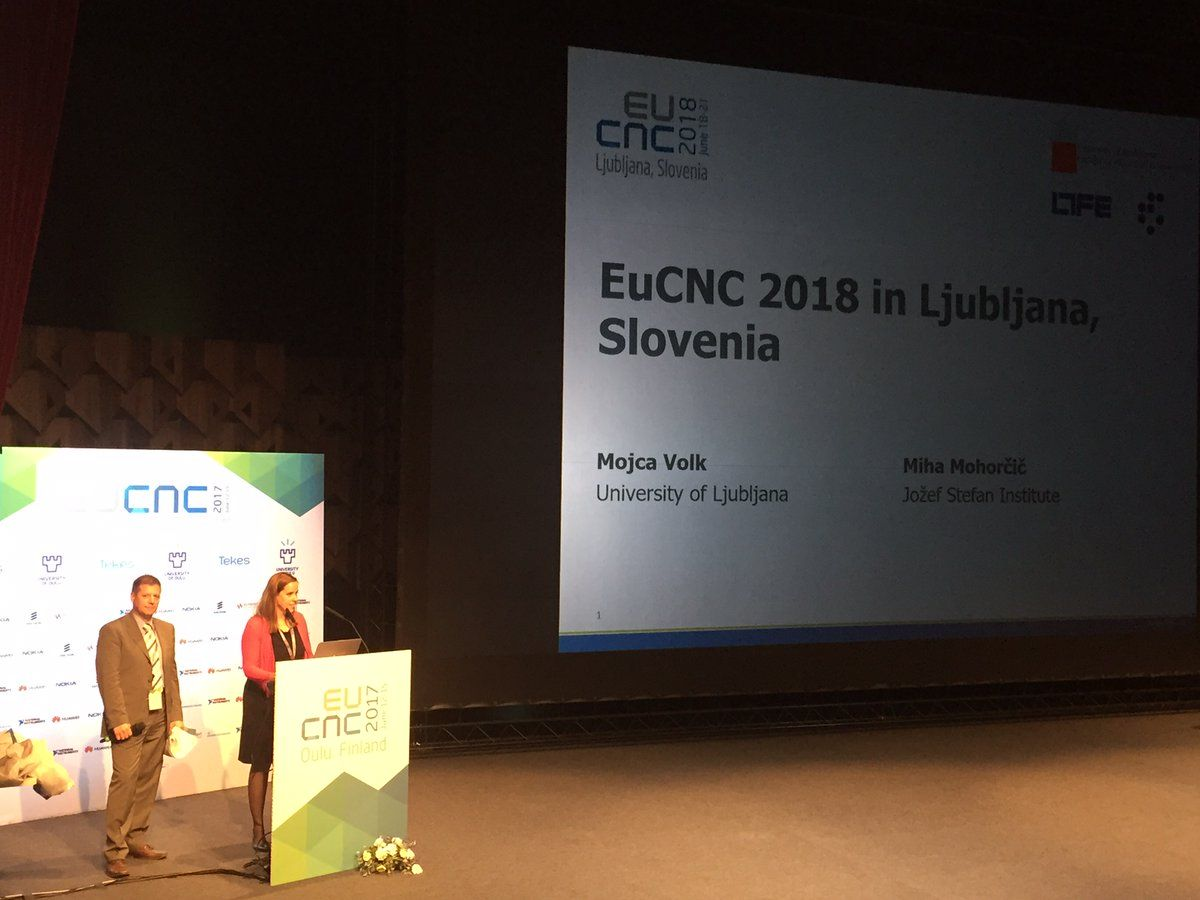
Ljubljana je v dneh od 18. do 21. junija 2018 gostila Evropsko konferenco o omrežjih in komunikacijah EuCNC (European Conference on Networks and Communications), na kateri je pri izmenjavi mnenj in predstavitvi raziskovalnih dosežkov na področjih razvoja mobilnih komunikacij 5. generacije (5G), izvajanja komunikacijskih storitev v oblaku, virtualizacije in upravljanja omrežij sodelovalo več kot 600 udeležencev iz več kot 30 držav z več kot 200 prispevki in 40 pilotnimi demonstracijami. Tehnični programski odbor sta skupaj vodila izr. prof. dr. Mihael Mohorčič z Odseka za komunikacijske sisteme Instituta “Jožef Stefan” in dr. Mojca Volk s Fakultete za elektrotehniko Univerze v Ljubljani.

Ljubljana gosti mednarodno konferenco EuCNC o tehnologijah 5G

Na konferenci EuCNC letos o tehnologijah pete generacije

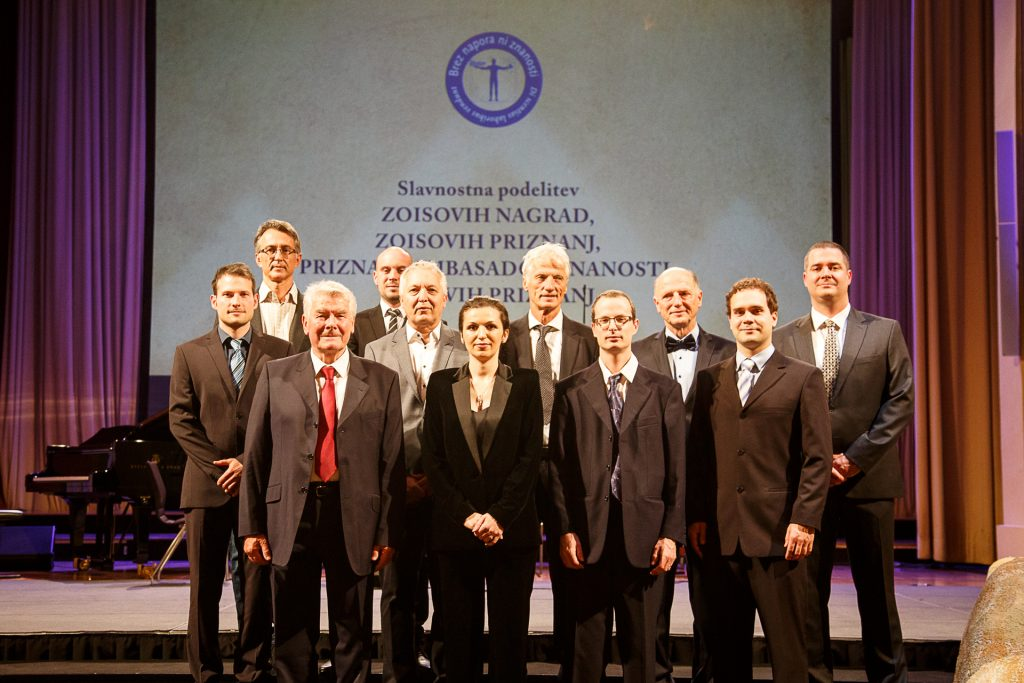
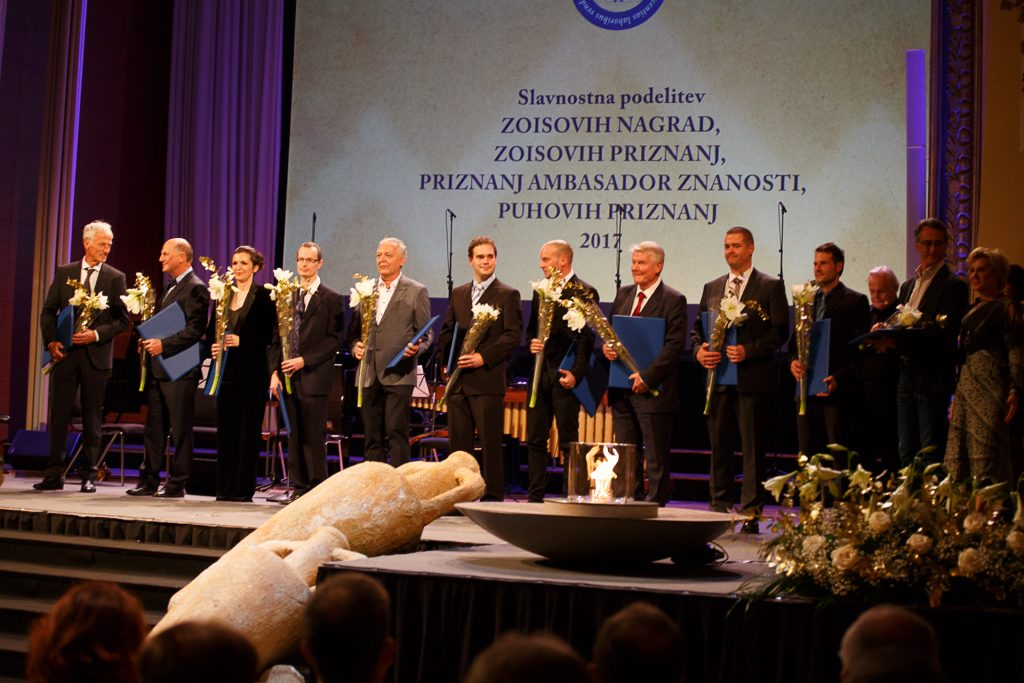
Prestižno Puhovo priznanje raziskovalcem Odseka za komunikacijske sisteme

V četrtek, 23. 11. 2017 so podelili najvišje državne nagrade za delo na znanstvenem, raziskovalnem in razvojnem področju.

Puhovo priznanje za pomembne dosežke na področju medicinske opreme je prejela raziskovalno-razvojna skupina strokovnjakov Odseka za komunikacijske sisteme iz Instituta “Jožef Stefan” ter podjetij SAVING in L-TEK za pomemben dosežek na področju mobilnega zdravja. Razvili so prenosni medicinski pripomoček za trajno in natančno spremljanje srčnega ritma SAVVY EKG. Naprava omogoča samostojne in zanesljive meritve delovanja srca, ki jih lahko izvede vsakdo.

Prejemniki nagrade so:

Prof. dr. Roman Trobec, dr. Viktor Avbelj, dr. Matjaž Depolli, dr. Aleksandra Rashkovska Koceva, dr. Gregor Kosec, Tomaž Krištofelc, Klemen Bregar, dr. Ivan Tomašić – vsi raziskovalci Instituta Jožef Stefan, Odsek E6

Uroš Stanič – Zavod BRIS, Ljubljana, Slovenija, Boštjan Barbiš – L-TEK Elektronika d.o.o., Marino M. Samardžija – Saving d.o.

Čestitke!

Experiments with ultra-narrowband networks

A flexible, ultra-narrowband transceiver has been developed at the Department of Communication Systems.

It can be used with the SIGFOX toolbox for rapid development of experiments using a visual editor. An innovative approach combining an embedded CPU and a software defined radio allows the use of original binary modem firmware while at the same time enabling simple modifications to the transmitted waveform and packet data.

A commercial SIGFOX base station has also been installed at the out-door testbed located at the Jožef Stefan Institute campus in Ljubljana. Together with the experimental transceiver, this setup allows for data collection, modeling and optimization of ultra-narrowband low-power wide-area networks.

Jožef Stefan Institute and SIGFOX are partners in the Horizon 2020 project eWINE. eWINE is focusing on improvements to current technologies that would enable dense and dynamic wireless networks of the future. One of the active areas of research is coexistence of different low-power wide-area networks in unlicensed bands. These networks provide connectivity to a large variety of small, constrained devices such as sensors and smart meters, and are predicted to grow considerably with the Internet of Things.

The Best paper Award IEEE ITST 2017

The paper “Challenges and Chances for Smart Rail Mobility at mmWave and THz Bands from the Channels Viewpoint”...

The paper “Challenges and Chances for Smart Rail Mobility at mmWave and THz Bands from the Channels Viewpoint”, authored by Ke Guan, Danping He, Andrej Hrovat, Bo Ai, Zhangdui Zhong, Thomas Kurner, was given the certificate of the Best Paper Award of IEEE 15th International Conference on ITS Telecommunications 2017.

Savvy ECG – a miniature personal ECG monitor

Savvy is a miniature personal device with an on-board ECG sensor for long-term measurement of heart rhythm. It was designed and developed in collaboration with a partner firm Saving d.o.o.. It’s a certified product (CE, medical device), already on sale in Slovenia.

It was designed to offer a multi-day autonomy and a wireless connection (Bluetooth Low Energy) to a Smartphone. The high-quality ECG measurements produced by Savvy are suitable for medical use (observation of atrial P wave for the control of atrial fibrillation and extrasystoles). The device can provide solutions to everyday problems of the medical personal in hospitals, health clinics, homes for the elderly and health resorts. Its exceptionally lightweight design allows for unobstructed use during sports activities or during exhaustive physical work.

Best Paper Award of the IEEE ComSoc Technical Committee Committee on Communications Systems Integration and Modeling

The paper entitled »Network traffic modeling for load prediction: a user-centric approach« published in IEEE Network, authored by two researchers from the Department of communications systems prof. dr. Aleš Švigelj and dr. Kemal Alič and dr. Radovan Sernec from Telekoma Slovenije, was selected for the Best Paper Award of the IEEE ComSoc Technical Committee on Communications Systems Integration and Modeling.

The award will be presented during the prestigious IEEE Globecom 2016 conference held in December in Washington D.C., USA. The paper addresses an innovative user-centric approach to network traffic modelling that was validated and used in the process of introducing, optimizing, and planning of new services at the Slovenian national telecom operator and service provider.

Sodelavca IJS iz Odseka za komunikacijske sisteme prof. dr. Aleš Švigelj in dr. Kemal Alič ter dr. Radovan Sernec iz Telekoma Slovenije, so bili za članek z naslovom »Network traffic modeling for load prediction: a user-centric approach« objavljenem v reviji IEEE Network, izbrani za nagrado »Best Paper Award of the IEEE ComSoc Technical Committee on Communications Systems Integration and Modeling«. Nagrada bo podeljena decembra na prestižni konferenci IEEE GLOBECOM v Washingtonu v ZDA. V članku je predlagan inovativen uporabniško usmerjen pristop k modeliranju prometa v velikih telekomunikacijskih omrežjih, ki je bil ovrednoten in uporabljen pri uvajanju, optimizaciji in načrtovanju novih storitev pri slovenskem nacionalnem ponudniku telekomunikacijskih storitev.

A new four channel AlphaSat Ka- and Q- band receiver station established in Ljubljana

In August 2015, a new beacon receiver station has been set-up at Jozef Stefan Institute in Ljubljana.

It is one of the three European stations with capabilities to measure the 19.7 GHz and 39.4 GHz satellite beacons and their cross-polar components and with capabilities to track the satellite in its geosynchronous orbit. The purpose of the project is to analyse the measured data and to research the atmosphere impacts on the radio wave propagation. Up to now, these effects were rather unexplored, especially at Q-band (39.4 GHz). The results will enable the communication engineers to develop efficient technology at high frequency bands and hence enable high satellite communication throughputs in the order of terabits/s. The results and analyses will be made in the scope of the actions of the European international group ASAPE (Group of the AlphaSat Aldo Paraboni propagation Experimenters).

Measurements and Analysis of Large-Scale Fading Characteristics in Curved Subway Tunnels at 920 MHz, 2400 MHz, and 5705 MHz

he paper titled “Measurements and Analysis of Large-Scale Fading Characteristics in Curved Subway Tunnels at 920 MHz, 2400 MHz, and 5705 MHz” written...

The paper titled “Measurements and Analysis of Large-Scale Fading Characteristics in Curved Subway Tunnels at 920 MHz, 2400 MHz, and 5705 MHz” written in collaboration with State Key Laboratory of Rail Traffic Control and Safety, Beijing Jiaotong University, China and Universidad Politécnica de Madrid, Spain has been published in IEEE Transactions on Intelligent Transportation Systems.

Sensing TVWS spectrum in London

As part of activities in the FP7 CREW project the Department of Communication Systems at JSI installed two VESNA SNE-ESTHER devices in London.

SNE-ESHTER is a radio receiver for the UHF band designed at JSI based on the VESNA sensor platform. Installed devices will be used for advanced spectrum sensing, contributing to the large scale Ofcom TV White Spaces pilot. One device was installed on the roof of a building in the King’s College London Strand campus and the other on the roof of Queen Mary University London. Long term measurements will be used to support the experimentation with advanced, so called cognitive radio devices, as secondary users in currently unused parts of the spectrum.

VESNA-based Intelligent Motorhome

See our intelligent, VESNA based moving lab developed in collaboration with Adria Mobil.

Jozef Stefan Institute and Adria Mobil, one of the leading European manufacturers of caravans and motorhomes, are collaboratively developing and implementing a prototype of an intelligent motorhome. The novel concept, which is referred to as Adria moving lab, focuses on hardware enablers and intelligent software that automates the motorhome and improves user experience. The goal is to build a smart motorhome that understands user needs, autonomously adapts to its users and environment, and consequently improves the comfort, safety and energy efficiency. The motorhome is equipped with multiple sensor-actutor units based on VESNA hardware platform that connected into a wired bus network, gather the data and forwarding it to software for real-time data analysis based on the QMiner data analytics platform. The latter is compiled for the BeagleBone platform and AI reasoning. The new integrated technology upgrades an existing service and enables smarter use of energy sources and more flexible control of heating, lighting, water supply etc.

Read more here.

VESNA Based Air Quality Monitoring

VESNA is now also used for air quality monitoring.

The VESNA-based platforms as planned within the project were primarily designed for the use as personal/portable sensor units in selected pilot cities (Belgrade, Ljubljana and Vienna). However, functionally the same unit with some further sensors for context enrichment will also be used as a reference static outdoor platform for relative calibration and the same unit with different set of sensors could be used as an indoor platform. The version for initial Phase 1 tests in pilot cities has been developed in the form of a personal sensor unit.

To learn more about VESNA Based Air Quality Monitoring, navigate the tabs of this site.

Extended LOG-a-TEC cognitive radio facility

The LOG-a-TEC cognitive radio facility has been extended with a new TV white space receiver and the ProtoStack tool.

LOG-a-TEC covers a set of diverse testbeds used for research purposes. It initially started 7 years ago as an outdoor environmental sensing facility, it evolved towards spectrum sensing and cognitive radio as its largest component. It is also covering application areas (verticals) such as photovoltaics, air quality and automotive. More recently, it is evolving towards a comprehensive heterogeneous M2M/MTC/dense IoT setup comprising LR-WPAN and LPWAN technologies. The one thing all setups have in common is that they are based on a version of the VESNA hardware platform which can be used as standalone or combined with other more powerful machines. VESNA is a modular and configurable embedded hardware platform developed by SensorLab.

To learn more about LOG-a-TEC, navigate the tabs of this site.

A Survey of Radio Propagation Modeling for Tunnels

A comprehensive paper entitled “A Survey of Radio Propagation...

A comprehensive paper entitled “A Survey of Radio Propagation Modeling for Tunnels” by Andrej Hrovat et al has just been published in IEEE Communications Surveys and Tutorials.

Experimental coexistence

The CREW OC2 project CREW­TV (Feb. 1 2013 ­ March 31 2014) focuses ...

The CREW OC2 project CREW­TV (Feb. 1 2013 ­ March 31 2014) focuses on the experimental coexistence in TV bands and will involve the LOG­a­TEC testbed where also the final demonstration will be given.

Talk about VESNA and Cognitive radio

Tomaz talked about VESNA and Cognitive...

Tomaz talked about VESNA and Cognitive radio in Kibepipa (talk in Slovenian).

CREW repository

The CREW repository containing information such as full ...

The CREW repository containing information such as full experiment descriptions, traces, background environments, processing script and performance metrics and benchmarking scores is now available here.